Reports indicate Nvidia CEO Jensen Huang has resigned with immediate effect following claims of an affair that the company's board reportedly addressed. The story is still developing, with no confirmed successor named yet at one of the world's most valuable tech companies.
International
International developer, security and startup news, picked for Iceland's tech community.
Node.js Fixes 16 Flaws, Including HTTP/2 Bugs That Crash Servers and Leak Other Connections' Data
Node.js released patches for 16 vulnerabilities this week, including two serious HTTP/2 bugs. One allows unauthenticated attackers to crash servers running the built-in HTTP/2 implementation, while the other can leak memory from other connections' responses. Fixed releases are available across all three supported lines: 22.23.5, 24.22.3, and 26.13.1.
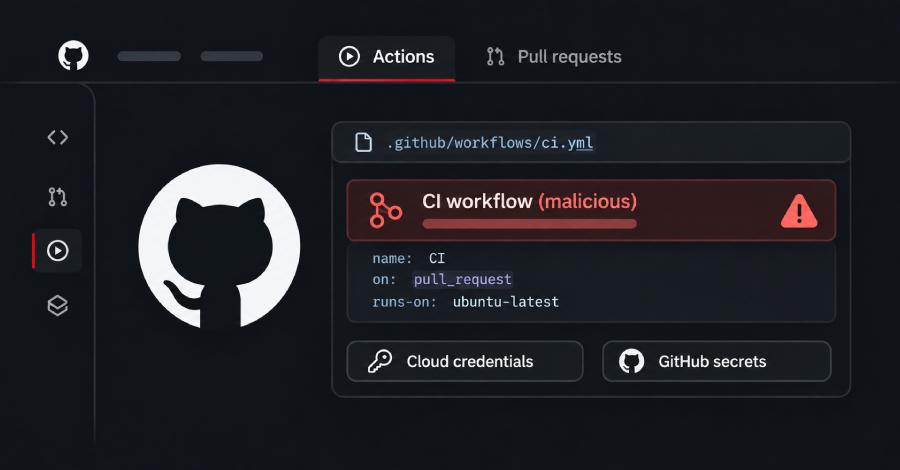
Attacker Used 4,837 Hijacked GitHub Accounts to Run a CI Secret Stealer in 1,806+ Repositories
Security firm Aikido Security reports that an attacker compromised nearly 5,000 GitHub accounts and used them to plant malware that steals secrets and cloud credentials accessible to CI workflows. The malware ran in over 1,800 repositories, likely harvesting sensitive access tokens from numerous victims.
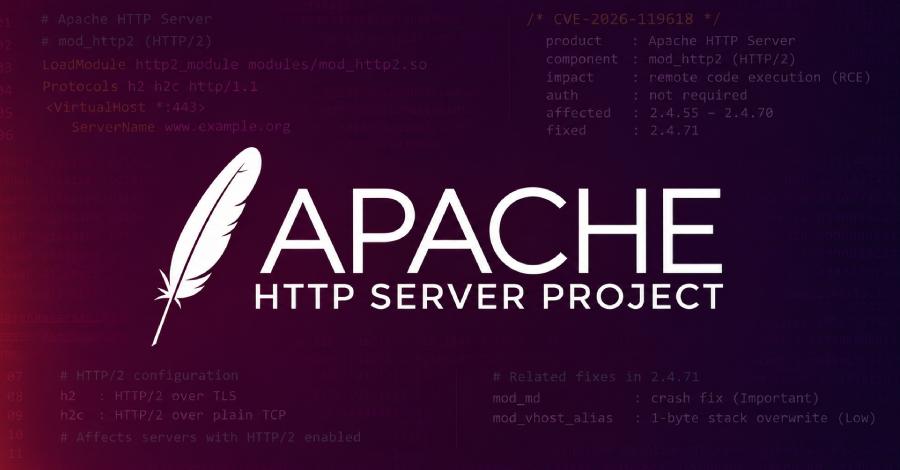
Critical Apache HTTP/2 Flaw Could Let Unauthenticated Attackers Execute Code Remotely
A critical remote code execution flaw, CVE-2026-119618, has been found in Apache HTTP Server's mod_http2 module, affecting versions 2.4.55 through 2.4.70. It is fixed in version 2.4.71, released yesterday, and only impacts servers with HTTP/2 enabled.
Critical RCE Vulnerability in Apache HTTP Server
Security researchers at Wiz have disclosed a critical remote code execution vulnerability in Apache HTTP Server, one of the world's most widely used web server software packages. The flaw could allow attackers to execute arbitrary code on affected servers, posing a significant risk to organizations running unpatched instances.
GitHub reported an incident affecting services including Webhooks and Actions, according to its status page. The disruption could impact developers and teams relying on GitHub's automation and integration features for their workflows.
Microsoft Patches 1,259 Flaws, Including Exploited Outlook Bug That May Expose NTLMv2 Hashes
Microsoft released patches for 1,259 vulnerabilities across Windows, Office, SQL Server, SharePoint and other products, marking the second straight month with over 1,000 fixes. Among them is an actively exploited Outlook flaw that could expose users' NTLMv2 hashes, making prompt patching a priority for IT teams.
Git Patches Flaw That Lets Malicious Repositories Execute Code During Recursive Clones
A newly disclosed Git vulnerability lets a malicious repository execute code on a machine that recursively clones it along with its submodules. Tracked as CVE-2026-111760 and caused by integer truncation in Git's index handling, it has been patched in Git 2.56.1 with backports covering versions 2.50 through 2.55.
Microsoft November 2026 Patch Tuesday fixes 1,235 flaws, Outlook zero-day
Microsoft's November Patch Tuesday addresses a record 1,235 vulnerabilities, including an actively exploited Outlook zero-day. Organizations are urged to apply the updates promptly given confirmed in-the-wild exploitation.
The Git project has released fixes for six security vulnerabilities, including a path to arbitrary code execution during recursive clones, unintended file writes via a malicious server's advertised HEAD, and stack corruption when stripping multiple GPG signatures. Users should update to Git 2.56.1 or the appropriate patched maintenance release.
Microsoft has announced .NET 11, the latest release of its software development platform. Details on new features and changes are covered in the official devblog post.
SAP Patches Four CVSS 10.0 Flaws, Including Two Enabling Remote Code Execution
SAP released its monthly security patches fixing four maximum-severity flaws, each rated 10.0 on the CVSS scale. Attackers could exploit three in the NetWeaver application server and one in Web Dispatcher without authentication, with two enabling remote code execution.
Google has issued an emergency update for Chrome to fix a security flaw already being exploited in real-world attacks. This marks the eighth confirmed zero-day vulnerability in the browser this year, and users are urged to update immediately.
Google Issues Chrome Security Update for Eighth Actively Exploited Zero-Day of 2026
Google has released a Chrome update patching nine security flaws, including a high-severity use-after-free bug in the XML component that is already being actively exploited. It marks the eighth zero-day vulnerability in Chrome confirmed exploited in the wild so far this year.
Attackers are actively exploiting a newly disclosed OpenSSH flaw dubbed „SSHole“ (CVE-2026-123158) to run commands, steal credentials, and gain persistent access on Linux systems. Because OpenSSH underpins remote access across countless servers, the active exploitation poses a widespread risk.
The post reports that Outlook.com has begun silently rejecting email from domains lacking DMARC authentication, without any official announcement. This could affect organizations that haven't yet configured DMARC for their email domains.
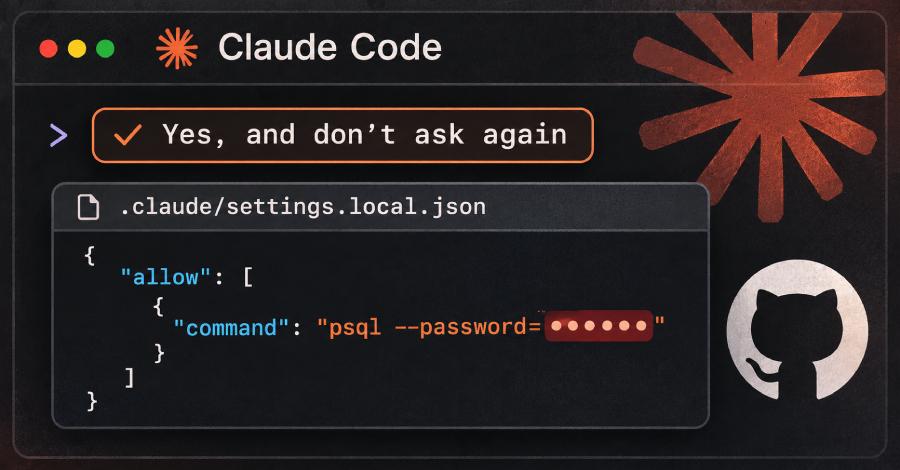
Claude Code's “Don't Ask Again” File Exposes Passwords and Keys in 1,122 Public Copies on GitHub
Security firm Apiiro found that Claude Code's project settings file can store approved commands verbatim, including passwords and API keys, when users select "don't ask again." Over 1,100 public GitHub repositories were found exposing these secrets to anyone.
SonicWall has patched seven SonicOS firewall vulnerabilities, including a critical flaw that lets attackers bypass SSL-VPN multi-factor authentication. The MFA bypass is already being exploited in the wild, prompting urgent calls for admins to update their systems.
In this Stack Overflow podcast episode, Ryan talks with Rakesh Kumar, a computer engineering professor at the University of Illinois Urbana-Champaign, about the complexity of chip manufacturing and the environmental and geopolitical impact of AI data centers. They also discuss how AI models are starting to reshape chip design itself.
App Store 2026 in numbers: AI, pricing, abandoned apps
A data-driven look at the App Store in 2026 examines AI app growth, pricing trends, and the large share of apps that appear abandoned by developers. The Hacker News discussion debates what these figures reveal about the health of Apple's app ecosystem.
Multiplayer tanks that demolish real buildings from OpenStreetMap
This is a multiplayer game where players control tanks and destroy buildings generated from real-world OpenStreetMap data. The Hacker News discussion centers on how the project turns open map data into an interactive, destructible city environment.
Kugelblitz – Mac-Native Google Earth Alternative
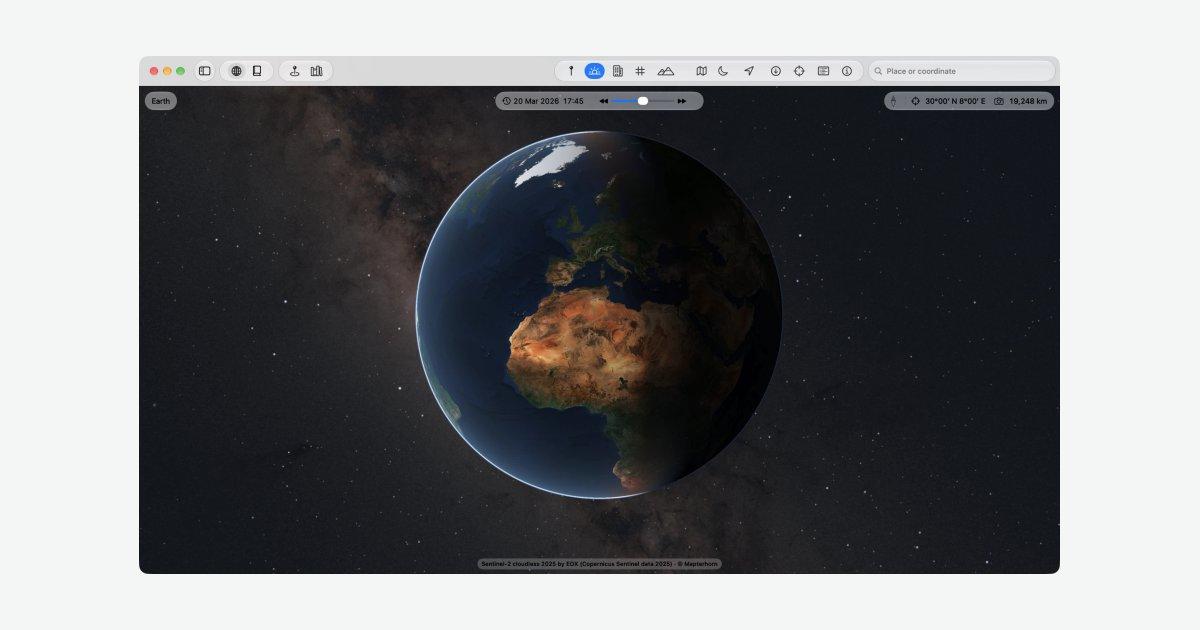
Kugelblitz is a new macOS app offering a 3D globe viewer built natively for Apple's platform, positioned as an alternative to Google Earth. The Hacker News discussion focuses on its implementation and use of native Apple technologies.
Hardcoded credentials and other issues in Tata Motors App
India's CERT-In has published an advisory detailing vulnerabilities in the Tata Motors app, including hardcoded credentials among other issues. The disclosure highlights ongoing security risks in automaker software and connected-vehicle apps.
The UK government plans to require job advertisements to disclose salary ranges. The move aims to increase pay transparency but is a labour-market policy story rather than a technology one.