A decade-old vulnerability dubbed "nginx2root" (CVE-2026-123007) in NGINX's open-source HTTP/2 code allows unauthenticated attackers to execute code on servers with HTTP/2 enabled. F5 has released fixed versions 1.31.9 and 1.30.7 to address the flaw.
International
International developer, security and startup news, picked for Iceland's tech community.
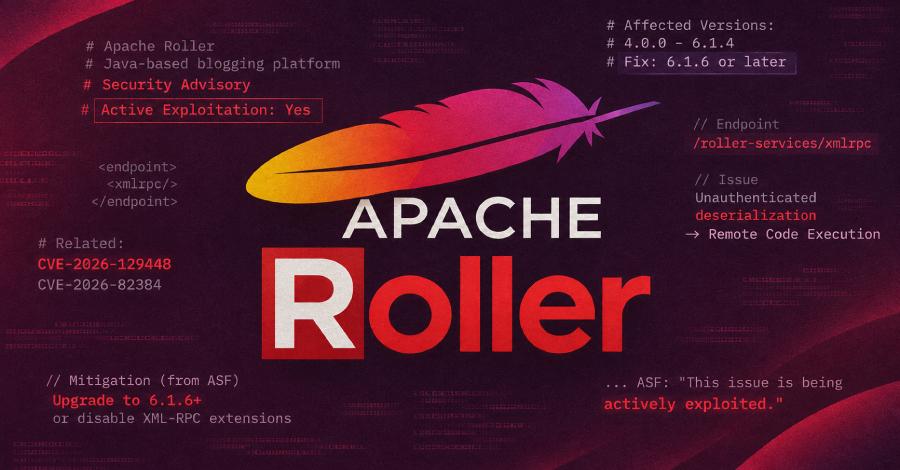
Critical Apache Roller RCE Flaw Under Active Exploitation, No Authentication Required
A critical Apache Roller vulnerability (CVE-2026-129448, CVSS 9.8) is being actively exploited in the wild. The flaw involves unauthenticated deserialization in the platform's XML-RPC endpoint, allowing remote code execution, according to the Apache Software Foundation.
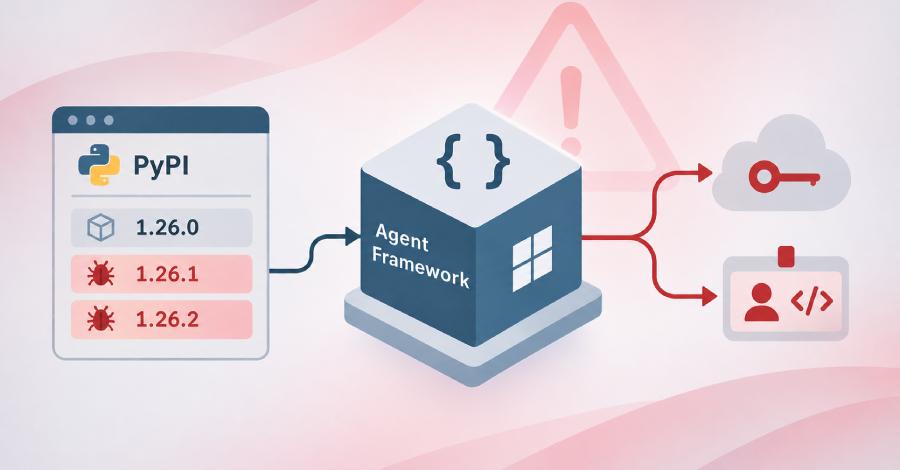
Microsoft’s Agent Framework PyPI package compromised to steal credentials
Attackers published two malicious versions of Microsoft's official Agent Framework package on PyPI. The tampered releases were designed to steal cloud credentials and other sensitive data from developers who installed them.
Security researchers at Wiz disclosed a critical pre-authentication remote code execution vulnerability in Nginx's HTTP/2 handling. The flaw could affect a wide range of servers relying on Nginx, making it a significant concern for infrastructure teams.
CISA Urges Immediate Patching of Java4Shell Flaw That Could Allow Remote Code Execution
CISA is urging organizations to immediately patch a newly disclosed critical flaw in Oracle Java, tracked as CVE-2026-114938 with a CVSS score of 8.1. The out-of-bounds write bug can lead to denial-of-service conditions or remote code execution under certain circumstances.
Attackers Compromise Microsoft's Agent Framework PyPI Package to Steal Cloud Credentials
Attackers managed to publish malicious versions of Microsoft's agent-framework PyPI package, running a credential stealer on every Python start. Multiple security firms including Wiz and Socket flagged versions 1.26.1 and 1.26.2 as compromised, targeting cloud credentials.
Java4Shell (CVE-2026-114938) Enables Pre-Auth RCE in Jira, Jenkins, Keycloak on Java 17+ AVX-512 VBMI Servers
Security firm Calif has disclosed Java4Shell, a flaw allowing unauthenticated attackers to execute arbitrary code in widely used applications such as Jira, Jenkins and Keycloak. It affects Java 17.0.6 and later, but only triggers on x86-64 Intel and AMD CPUs supporting the AVX-512 VBMI instruction set.
Critical Java4Shell flaw allows RCE attacks on major Java applications
A newly disclosed critical flaw called Java4Shell in OpenJDK lets unauthenticated attackers remotely execute code. It affects widely used enterprise tools including Jenkins, Jira, Confluence and Keycloak, making it an urgent patching priority for operators.
Java4Shell: RCE in OpenJDK when processing Base64
The post describes a remote code execution vulnerability in OpenJDK triggered during Base64 processing, dubbed Java4Shell. It echoes past severe Java security flaws and could affect many systems relying on the Java platform.
Oracle to Patch 11 Java Flaws Today as Critical OpenJDK RCE (CVE-2026-114938) Report Emerges
Oracle is set to release patches for 11 remotely exploitable, unauthenticated Java SE vulnerabilities on November 17, 2026, with a maximum CVSS score of 8.1. Separate reports warn of an additional, potentially critical remote code execution flaw affecting OpenJDK.
Java4Shell: pre-auth RCE flaw in Java 17 puts servers at risk (CVE-2026-114938)
Security researchers have disclosed a critical pre-authentication remote code execution vulnerability in Java 17, tracked as CVE-2026-114938. Because Java underpins many enterprise backends, the flaw could expose a wide range of servers to compromise if left unpatched.
Microsoft Releases .NET 11: C# 15 Union Types, Native AOT CLI Host, and CoreCLR by Default in MAUI
Microsoft has shipped .NET 11, a Standard Term Support release, adding C# 15 union types and closed hierarchies alongside a preview of Runtime Async and a new Native AOT CLI host. It also brings Zstandard compression, async validation, OpenAPI 3.2 in ASP.NET Core, CoreCLR as MAUI's default runtime, and experimental vector search in EF Core 11.
Optimizely supply chain attack infects major brands' sites with malware
A suspected supply chain attack on Optimizely has injected malicious JavaScript into numerous major websites, including Zoom, CNN, Fox News, BBC, Salesforce, and GitLab. The scripts reportedly attempt to steal cryptocurrency and payment data while exploiting iOS vulnerabilities on visiting devices.
Google warns that fully-automated AI attacks are coming soon
Google warns that attackers are increasingly using agentic AI frameworks to automate vulnerability discovery and exploitation. The shift suggests fully autonomous, machine-speed cyberattacks could soon become the norm rather than the exception.
A newly disclosed, 11-year-old Linux kernel flaw called NoisyTCP affects nearly all Linux distributions. It allows attackers to crash servers running Nginx, Apache, and SSH with default configurations.
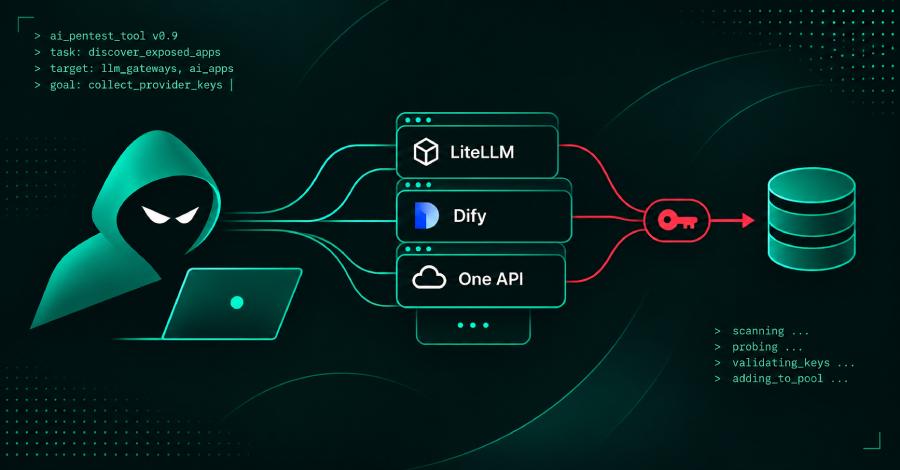
Amazon's threat intelligence team used decoy servers to catch AI agents scanning internet-exposed apps like LiteLLM, One API, and Dify for stored AI provider API keys. Stolen keys were then reportedly used to run AI models that helped search for even more keys.
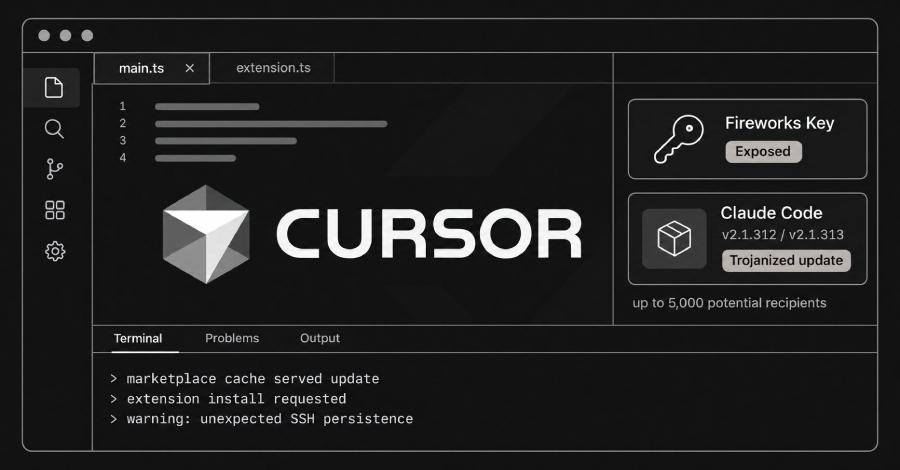
Stolen Fireworks AI Key Led to Cursor Data Breach and Trojanized Claude Code Extension
A stolen access key, leaked after a breach at Fireworks AI, allowed an attacker to copy data from Cursor and plant a trojanized version of Anthropic's Claude Code extension on Cursor's marketplace. Cursor confirmed the key granted read-only access and traced the compromise back to the Fireworks AI incident.
Cursor confirms security breach led to malicious Claude Code extension
Cursor confirmed attackers breached its marketplace by stealing credentials from AI infrastructure provider Fireworks AI, allowing them to distribute a malicious Claude Code extension to users. The incident highlights supply-chain risks in extension marketplaces for popular AI coding tools.
PostgreSQL Patches 52 Flaws, Including 22-Year-Old Bug Enabling Authenticated RCE
New PostgreSQL updates fix 52 security flaws, including a severe type confusion bug (CVE-2026-6460, CVSS 8.8) that lets an authenticated user with object-creation rights execute code on the server. Full protection also requires rebuilding any installed C-language extensions, and the flaw had gone undetected for about 22 years.
Attackers exploited vulnerable Check Point Security Gateway instances using PHP2Shell techniques to gain initial access. They then deployed destructive wiper malware targeting VMware ESXi hosts, wiping data on affected virtual infrastructure.
Check Point has released emergency hotfixes for a high-severity flaw that attackers have been exploiting since late October to gain root access and persist on vulnerable devices. The company urges customers to patch immediately as active exploitation has been confirmed.
Microsoft is investigating a widespread outage affecting Microsoft 365 services including Outlook, Teams and Copilot, with users worldwide reporting connectivity issues. The cause and expected resolution time remain unclear.
Apache HTTP Server patches critical HTTP/2 remote code execution flaw
A critical vulnerability in Apache HTTP Server's HTTP/2 module allowed unauthenticated attackers to achieve remote code execution. Apache has released a patch, and administrators running affected servers should update as soon as possible.
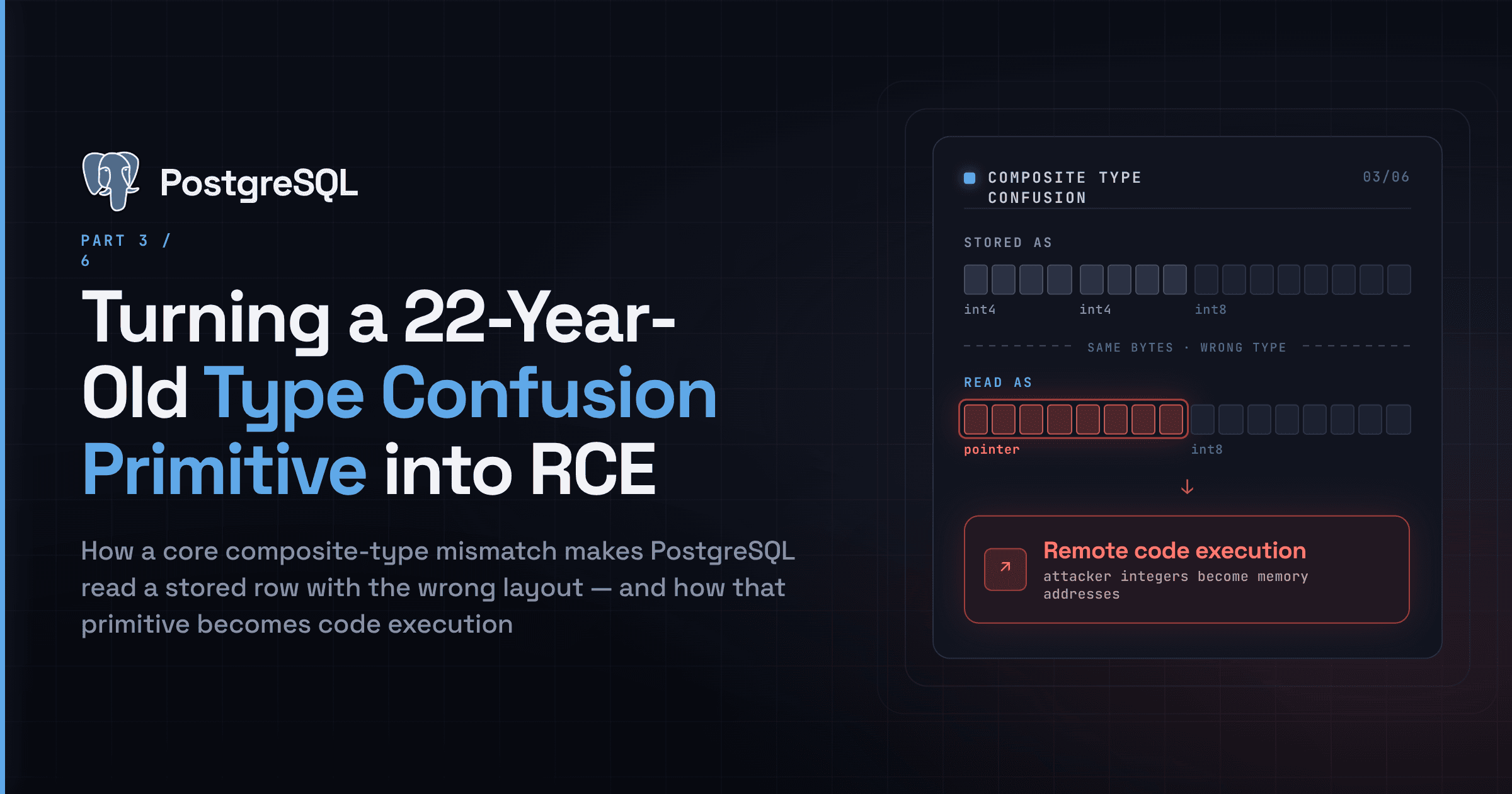
22-Year-Old PostgreSQL Bug Turned into Remote Code Execution
A security researcher details how a decades-old type confusion bug in PostgreSQL was weaponized into a working remote code execution exploit, tracked as CVE-2026-6460. The deep technical walkthrough highlights how long such latent flaws can persist in widely used database systems, relevant to anyone running PostgreSQL in production.


.jpg&w=3840&q=75)