Hacker News
Tæknipúlsinn summary
The UK government plans to require job advertisements to disclose salary ranges. The move aims to increase pay transparency but is a labour-market policy story rather than a technology one.
International developer, security and startup news, picked for Iceland's tech community.
The UK government plans to require job advertisements to disclose salary ranges. The move aims to increase pay transparency but is a labour-market policy story rather than a technology one.
Finnish startup Vensum Power has raised €9 million in a Series A round to scale production of its software-defined power conversion technology. The tech aims to cut electricity losses in AI data centres, EV charging and energy storage, bringing total funding to €15.2 million.
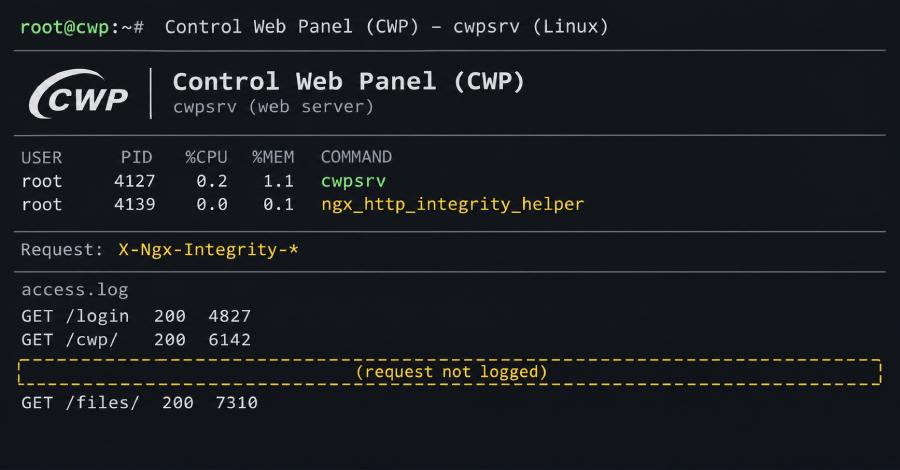
Researchers at QiAnXin's XLab discovered a backdoor hidden in the web server component of Control Web Panel, a popular Linux hosting management tool, allowing attackers to execute commands that leave no trace in access logs. Installing the backdoor requires root access, meaning attackers must already have compromised the server.
Researchers at watchTowr demonstrated how two flaws in Barracuda's Email Security Gateway can be chained to gain unauthenticated root access to the appliance. Barracuda released patches on Monday, and watchTowr published a detailed breakdown of the attack chain soon after.
A short opinion post on LessWrong questions whether recent progress in AI research reflects genuine ingenuity or simply scale and iteration. It appears as part of a comment thread discussing the nature of AI development rather than presenting new findings.
This blog post compares predictions about AI found in classic science fiction with how artificial intelligence has actually developed. It explores which imagined futures proved prescient and which missed the mark.
The piece examines how volunteer communities have built foundational parts of the internet, from the Linux operating system to Wikipedia. It explores what motivates these collaborative efforts and their significance for open technology.
An Atlantic piece examines how growing public backlash against data centers in the US has started shaping recent election outcomes. It argues Silicon Valley has underestimated voter anger over rising energy costs and infrastructure strain linked to data center expansion.
Pwn.college is a free platform offering hands-on cybersecurity training, teaching users about software vulnerabilities and exploitation techniques through practical challenges. It originates from university coursework and is aimed at people building offensive security skills.
Nvidia has released NVKE, a Kubernetes distribution tailored for GPU infrastructure and AI workloads. The project is hosted on GitHub and aimed at organizations running large-scale AI compute clusters.
A new analysis argues that closed, proprietary AI models currently lead the price-performance frontier, contrary to expectations that open-source models would catch up. The blog post has sparked discussion on Hacker News about the competitive dynamics of the AI model market.
Tesla and SpaceX have reportedly seen their combined market valuation drop by more than $420 billion within two days. The brief post doesn't specify the cause, but it has sparked discussion on Hacker News about the implications for investors and the tech sector.
The FBI and CISA have warned that hackers are actively targeting industrial refrigeration and cold-chain monitoring systems around the world. Successful attacks could cause food spoilage, equipment damage, and even fire hazards if systems fail.
MoofTCP is a new open-source project offering a modern replacement for MacTCP, the original networking stack used on classic 68k Macintosh computers. It aims to provide more reliable networking support for vintage Mac enthusiasts still running these older machines.
Major investors are reportedly skeptical that Anthropic could achieve a $1.5 trillion valuation in a potential IPO, according to the Wall Street Journal. The piece reflects growing investor caution around sky-high valuations in the AI sector.
GitHub's enterprise and organization Copilot usage metrics API now reports whether developers act on code review comments, enabling an addressed-rate calculation per repository. New fields break down comments by severity, review tier, type, and customization, plus track merges with no later human change request.
GitHub's Copilot usage metrics API now flags users missing client telemetry or running outdated IDE/extension versions, adding new per-user fields and daily counts to enterprise and organization reports. This helps admins identify and follow up on gaps in usage data without filing a support ticket.
Mark Cuban alleges Facebook has knowingly allowed AI deepfake-based scam advertisements to run on its platform. He cites internal documents suggesting such fraudulent ads generated as much as $16 billion in revenue for the company.
Original headline (Icelandic): Cuban: Facebook knowingly runs AI deepfake scam ads; docs say $16B fraud revenue · Tæknipúlsinn translation
The piece discusses a sharp decline in US stock markets, with $2.5 trillion in value wiped out. The excerpt provided is financial commentary without a clear technology angle.
Attackers are impersonating OpenAI, SpaceX and Anthropic with fake event invitations to trick employees into phishing pages. Two phishing-as-a-service platforms are used to harvest Microsoft and Google login credentials and session tokens.
GitHub details a new Git storage architecture that decouples storage from compute and minimizes coordination, letting it handle thousands of writes per second. Internal tests showed 5,000 concurrent agents sustaining 7,200 pushes per second to one repo while reads stayed fast.
The Nasdaq index dropped 5% as investors pulled back from AI-related stocks following a US election. The coverage focuses on market reaction and growing uncertainty around AI investment momentum, though little substantive detail is given here.
A developer describes reverse-engineering their gym's app after it pushed an unwanted social-media feature onto users. The post walks through how they dissected the app and what they found about its behaviour and data handling.
Original headline (Icelandic): My gym forced a social media down my throat. So I reverse-engineered its app · Tæknipúlsinn translation
Rivet, a Y Combinator-backed startup, has launched a system for scaling and orchestrating AI agents built on top of S3 storage. The project is open for community discussion and feedback via its Hacker News launch post.
 Tech.eu

 The Hacker News





 BleepingComputer

 GitHub Changelog





 GitHub Blog