HPE has released patches fixing 72 vulnerabilities in ArubaOS, including eight maximum-severity flaws that could allow remote code execution or authentication bypass. Organizations running Aruba networking gear are urged to update promptly to prevent exploitation.
International
International developer, security and startup news, picked for Iceland's tech community.
The OpenSSL project has released version 4.1.0 of its widely used cryptography library that underpins countless servers and software systems. Full release notes and changes are available in the GitHub release.
Cloudflare Brings On-Demand CPU and Memory Profiling to Production Workers
Cloudflare has added on-demand CPU and memory profiling for Workers and Durable Objects running in production. Developers can now generate interactive flamegraphs to diagnose performance bottlenecks without disrupting live services.
Sweden's government offices plan to ban staff from using ChatGPT and Claude on work computers, according to Sveriges Radio. The move appears driven by data security and confidentiality concerns within government IT policy.
URGENT - PHP Warns of Another Unpatched RCE Two Days After Emergency PHP2Shell Patches
PHP has disclosed a new vulnerability, tracked as CVE-2026-115560, that could allow remote code execution on web servers, just two days after emergency patches for the PHP2Shell flaws. The issue only affects unusually configured applications, so PHP considers the risk low and is recommending a workaround instead of an emergency fix.
Presentation: Move Fast, Don’t Break Trust: Shipping Constantly with Humans and Beyond
In this QCon London talk, Monzo's Suhail Patel explains how the company structures its engineering teams and tech stack to ship hundreds of changes daily without sacrificing reliability. He covers opinionated microservice patterns, staging environments, static analysis and continuous profiling that let both engineers and LLMs iterate quickly and safely.
Critical Flaw in Python’s Popular Pillow Image Library Allows Code Execution via a Crafted Image
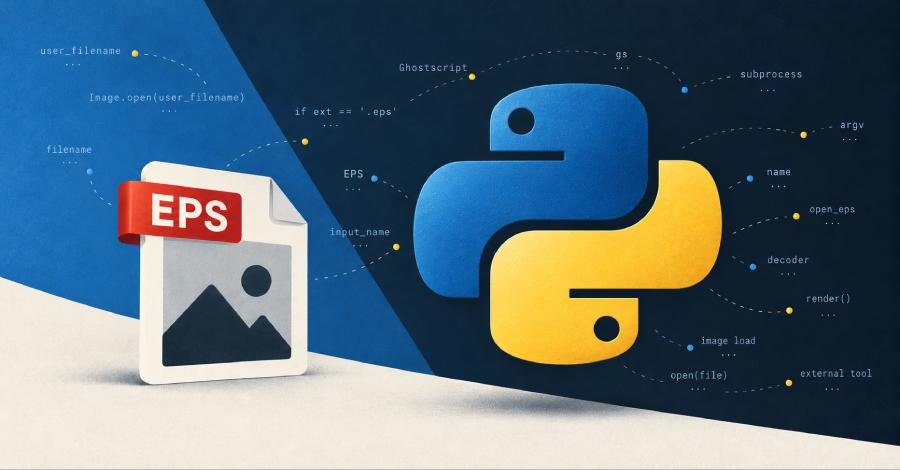
A vulnerability in Pillow, the most widely used Python image library, lets attackers run OS commands on a server by exploiting how it handles EPS image files. Tracked as CVE-2026-112900, the flaw arises because Pillow passes filenames to Ghostscript without proper validation.
Anthropic Adds Opt-In Security Scanning for Critical Open-Source Projects
Anthropic has launched OSS Scanner, a free opt-in service that scans open-source projects for vulnerabilities and sends maintainers periodic reports generated by its models, including Claude Mythos. The reports skip human review, leaving maintainers to validate findings and choose which fixes to apply.
Researchers Demonstrate Node2Shell RCE Exploit on Node.js Build Using Crafted Brotli Data
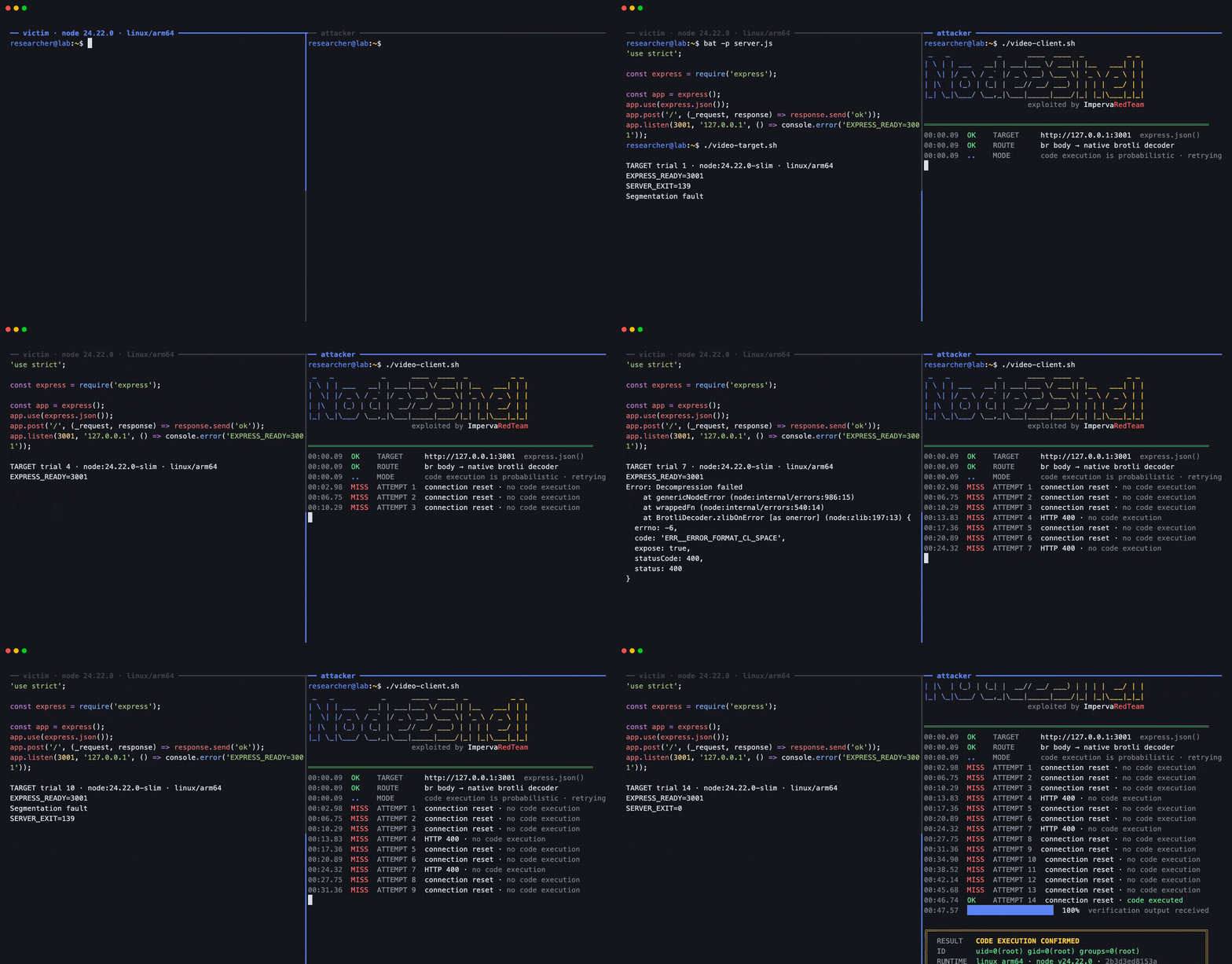
Security researchers at Imperva demonstrated a remote code execution flaw by feeding crafted Brotli data to the decoder bundled with an official Node.js 24.22.0 build, running arbitrary code with no debugger or custom setup. The vulnerability, tracked as CVE-2026-111497, has been disclosed to the Node.js project.
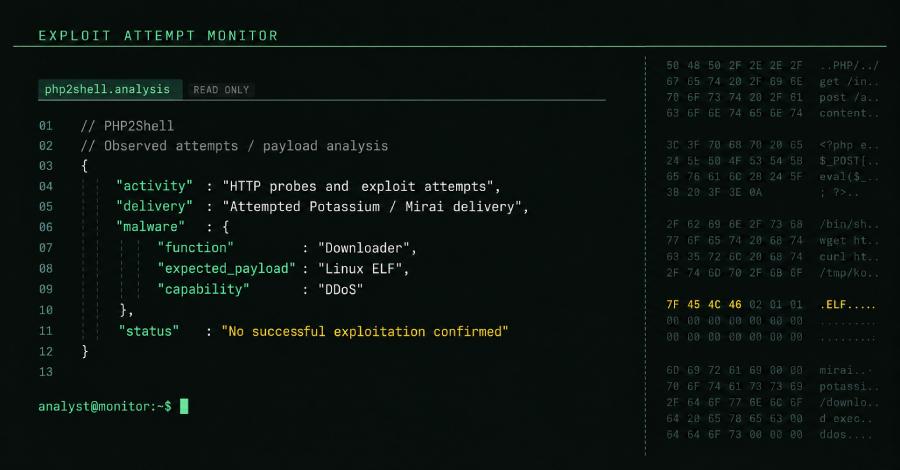
Attackers have been attempting en masse to exploit newly disclosed PHP vulnerabilities, dubbed PHP2Shell, to infect systems with a Mirai botnet variant called Potassium. The flaws, CVE-2026-109618 and CVE-2026-109619 with a CVSS score of 9.2, allow unauthenticated remote access but appear harder to weaponize than first feared.
GitHub Copilot in Visual Studio — September update
The September update to GitHub Copilot in Visual Studio 2026 adds the ability to explore pull requests directly in chat via a Git agent, plus preview support for bringing your own AI models (BYOM) from providers like OpenAI, Anthropic and Ollama. It also lets Copilot auto-fix vulnerable NuGet packages flagged in the Error List.
LLMs are making formal software verification feasible at a much larger scale
Anthropic argues that large language models are making formal software verification, traditionally slow and expensive, feasible at a much larger scale. This could reshape how organizations ensure the correctness and safety of critical systems.
Railway warns devs to rotate secrets after potential breach
Cloud platform Railway has flagged suspicious activity on systems storing customer environment variables, including secrets and credentials. The company is urging developers to rotate affected keys and tokens immediately as a precaution.
LiteLLM release pipeline hacked to distribute info-stealer malware
Attackers compromised LiteLLM's release pipeline, poisoning its PyPI package and publishing malicious Docker images. The payload steals credentials, secrets, and environment variables from affected systems.
Arista has issued an advisory about a zero-day SQL injection flaw in VeloCloud Orchestrator, the central management system for its SD-WAN networks, which is already being exploited in attacks. The bug allows anyone with login access, even a read-only customer account, to escalate to full operator-level control.
eMudhra to Exit Global SSL/TLS Business After 8 Intermediate CA Keys Found Easily Guessable
Indian certificate authority eMudhra is exiting the global SSL/TLS certificate business after a researcher recovered the private keys of eight of its intermediate CA certificates, which turned out to be easily guessable. Affected customers will have their certificates replaced for free by eMudhra's partners.
ThreatsDay: AI Secrets Leak, PingCAP Source Theft, Signal Hang-Up Flaw, Laravel Auth Bypass + 21 More
This roundup from The Hacker News covers a wave of new security issues, including critical flaws in PHP, GitLab and Node.js, a source-code theft at PingCAP, and hundreds of compromised Tor relays. It also details bugs in Signal and Laravel plus leaked AI-related secrets and credentials.
OpenShell – A safe, private runtime for fleets of autonomous AI agents
NVIDIA has released OpenShell, an open-source project aiming to provide a secure, private runtime environment for large fleets of autonomous AI agents. It's hosted on GitHub and targets developers and enterprises looking to run such agents safely at scale.
Arista Networks has released patches for a previously unknown zero-day vulnerability in on-premises deployments of VeloCloud Orchestrator (VCO). The flaw is already being actively exploited in attacks, and administrators are urged to apply the update immediately.
Two CVSS 9.0 Linux KSMBD RCE Flaws Disclosed on Public Mailing Lists Before Kernel Fixes
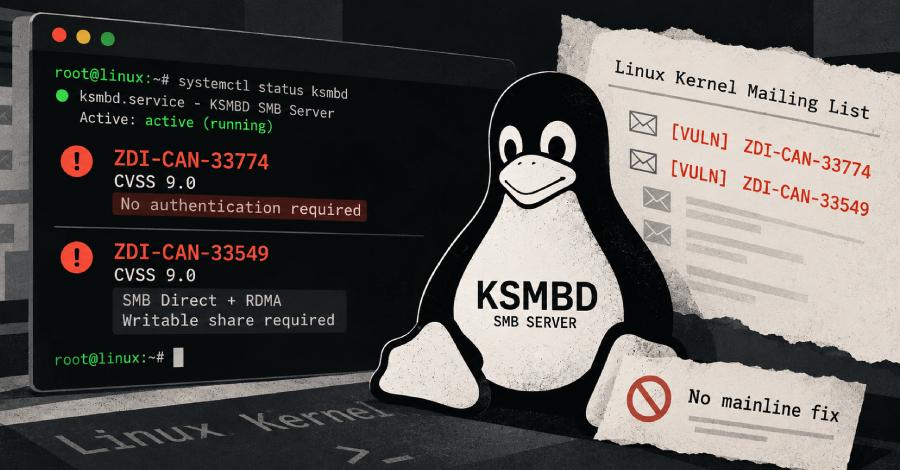
Two critical flaws in KSMBD, the Linux kernel's built-in SMB server, were disclosed on public mailing lists before any mainline kernel fix was ready. One can reportedly be triggered pre-authentication, raising risk for exposed servers, while the other needs SMB Direct and RDMA-capable networking.
A New Mexico court has ordered Meta to pay $25 billion in penalties over 43 million privacy violations stemming from the 2018 Cambridge Analytica scandal. The judge found the company repeatedly breached the state's data privacy laws.
Microsoft shares how to fix broken Exchange Online EWS apps
Microsoft has published guidance for IT admins on re-enabling the retired Exchange Web Services (EWS) API in Exchange Online. The fix addresses apps that broke after EWS was officially deprecated.
A Harvard study of 718 companies using the Jellyfish analytics platform finds that AI coding assistants increase code volume but not completed work. The bottleneck shifts downstream, especially to code review, offsetting productivity gains.