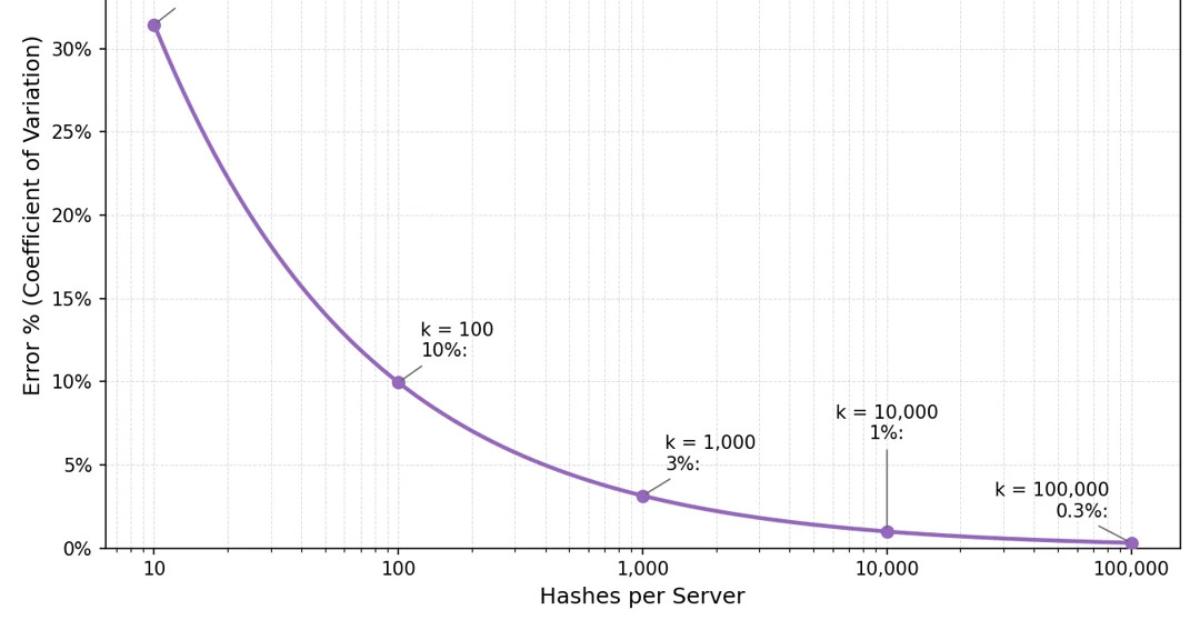
Cloudflare cut the memory footprint of its internal load-balancing service by over 100 TB by optimizing the Rust-based consistent hashing in its pingora-ketama library. Compacted hash-ring entries and statistical analysis of hash distribution reduced the number of hashes per backend by about 90%.
International
International developer, security and startup news, picked for Iceland's tech community.
Broccoli2Shell: Brotli decoder RCE in Node.js, Python and more
Security researchers disclosed a vulnerability in the widely used Brotli decompression library, affecting implementations in Node.js, Python and other runtimes, that could allow remote code execution. The flaw is notable because Brotli is embedded in countless libraries and servers across the software ecosystem.
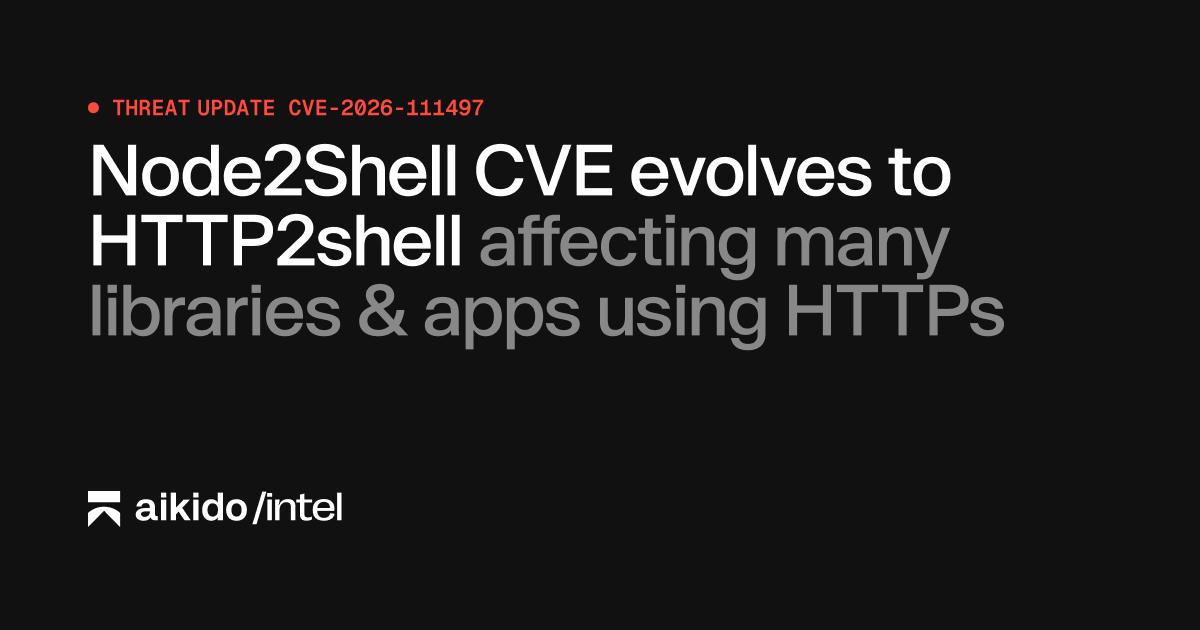
Node2Shell evolves to HTTP2Shell, blast radius affects many HTTP libs and apps
Security researchers at Aikido report that the Node2Shell vulnerability has expanded into a broader issue dubbed HTTP2Shell, impacting numerous HTTP libraries and applications across multiple languages, including Python. The flaw, tracked as CVE-2026-111497 and linked to Brotli decompression, suggests a wide blast radius for affected software supply chains.
CISA Flags Two Actively Exploited Critical Flaws in Collabora Online and Arista VeloCloud
CISA has added two critical vulnerabilities to its Known Exploited Vulnerabilities list, affecting Collabora Online's built-in CODE Server and Arista's VeloCloud Orchestrator. Both flaws carry high CVSS scores and are reported to be actively exploited in real-world attacks.
Evolving Threat: http2shell is an RCE in node, Python, and more
Security firm Aikido Security describes a new attack technique called http2shell that can lead to remote code execution in widely used stacks including Node.js and Python. The post, shared as a social media thread and surfaced on Hacker News, offers limited technical detail in the provided text itself.
OpenAI: Securing our frontier model training environment
OpenAI outlines the security measures it uses to protect the infrastructure and data involved in training its most advanced AI models. The post is part of the company's effort to demonstrate responsible handling of sensitive technology against external threats.
Google has updated its privacy policy language to reserve the right to use Gmail and Google Photos data for ad targeting, sparking backlash from users. Critics say this contradicts the company's long-standing promise to keep email and photo content separate from its advertising business.
Microsoft plans to roll out AI-powered, context-aware phishing detection for Teams messages starting in early November 2026. The feature aims to catch scam attempts by analyzing message context rather than relying solely on traditional detection methods.
Ruby Fixes Three Regex Engine Bugs Responsible for Four Critical GitLab RCE Flaws
Ruby has released versions 4.0.9, 3.4.12 and 3.3.13 to fix three bugs in its Onigmo regex engine. The flaws underpinned four critical GitLab vulnerabilities where a crafted pattern could corrupt memory during compilation and potentially allow code execution.
Exposed Infrastructure Reveals How Ransomware Affiliates Used AI Agents to Execute Intrusions
Researchers have exposed the infrastructure behind an AI-powered intrusion ecosystem linked to the INC and The Gentlemen ransomware groups. At its core is an autonomous attack framework called Phantom, reportedly operated by a Russian-speaking actor who conducts both intrusions and data extortion.
Microsoft: Windows Server 2016 reaches end of support in January
Microsoft confirmed that Windows Server 2016 will stop receiving security updates when support ends in January 2027. Organizations still running it should plan upgrades or migrations ahead of time to avoid security risks.
UUIDv7 doesn't have the properties you think it does
The post challenges common assumptions developers make about UUIDv7, the newer time-ordered UUID format. It explains that properties like strict ordering and uniqueness aren't guaranteed the way many engineers expect, which can lead to subtle bugs in database design.
PHP shares mitigation for new RCE vulnerability with no patch
PHP's security team has published mitigation steps for a newly disclosed remote code execution flaw affecting servers running non-default configurations. No official patch exists yet, so admins are urged to apply the workarounds immediately.
Enterprise installations for GitHub Apps generally available
GitHub has made enterprise-level installations of GitHub Apps generally available, enabling teams to replace classic personal access tokens with App-based automation. The update adds governance, security and administrative permissions covering policies, two-factor authentication, IP allowlists and access restrictions.
Anthropic published a research assessment examining model alignment behaviour tied to a cybersecurity testing incident involving the UK's AI Safety Institute. The piece explores how the model responded under testing conditions and what it implies for trustworthiness of AI systems in security-related tasks.
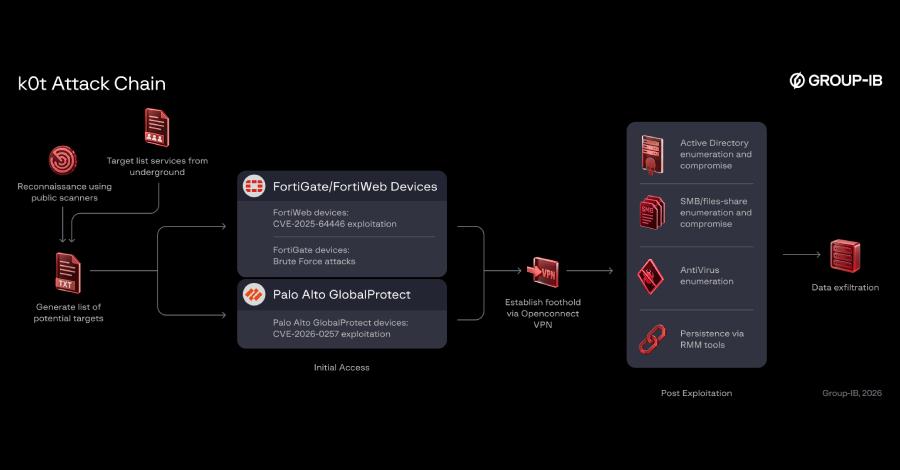
Researchers have revealed a large-scale campaign exploiting exposed network edge devices, including Fortinet FortiGate firewalls and Palo Alto Networks GlobalProtect VPNs. The attackers gained access to numerous organizations worldwide and in some cases attempted further compromise, exposing over 70,000 credentials.
AWS Introduces Lambda Web Functions for Node.js Applications
AWS has launched Lambda Web Functions, letting developers run Node.js web apps built with frameworks like Express and Hono directly on Lambda. The feature supports concurrent requests and response streaming, simplifying serverless deployment of web services.