International
International developer, security and startup news, picked for Iceland's tech community.
 Hacker News

Cloudflare details engineering changes to its DNS infrastructure that halved zone build times and cut memory usage by 85%. The post explains the architectural shift to targeted zone builds instead of full rebuilds, improving efficiency at scale.

Anthropic, the company behind Claude, disclosed $17 billion in third-quarter revenue in updated financial filings. The figures also reveal commitments totaling $895 billion, highlighting the massive scale of capital flowing into the AI sector.
 BleepingComputer

A cyberattack on refrigeration systems has disrupted operations at multiple European supermarket chains after attackers remotely altered temperature settings on freezers and coolers. The incident highlights the risks facing internet-connected industrial control systems used in retail.
Uber Builds MCP Gateway to Govern Access to 800+ Servers and 5,000+ AI Agent Tools
 InfoQ

Uber has built an MCP Gateway to standardise how AI agents discover and invoke its internal services across more than 800 MCP servers and 5,000 tools. The system separates tool registration from execution and adds automated API discovery, access controls and sensitive-data redaction.
Over 1,000 GitLab servers vulnerable to ongoing RCE attacks
More than 1,000 internet-facing GitLab servers remain unpatched against a maximum-severity vulnerability that allows remote code execution, despite active exploitation. Security researchers warn organizations to urgently apply the available patch to avoid compromise.
Critical Langflow Flaws Could Let Unauthenticated Attackers Run Code on Servers
 The Hacker News
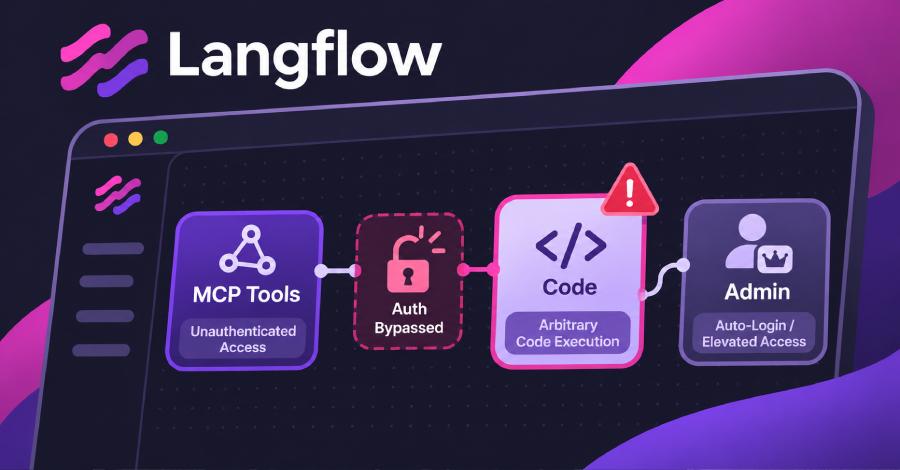
IBM disclosed two critical vulnerabilities in Langflow, an open-source AI workflow builder, allowing unauthenticated attackers to bypass authentication and execute arbitrary code. Every release from 1.0.0 through 1.12.8 is affected, with version 1.13.0 the only fix.

Synology is urging customers to immediately update their NAS devices following a surge in C3RB3R ransomware attacks. The attackers reportedly exploit vulnerabilities in outdated software versions to compromise storage systems.
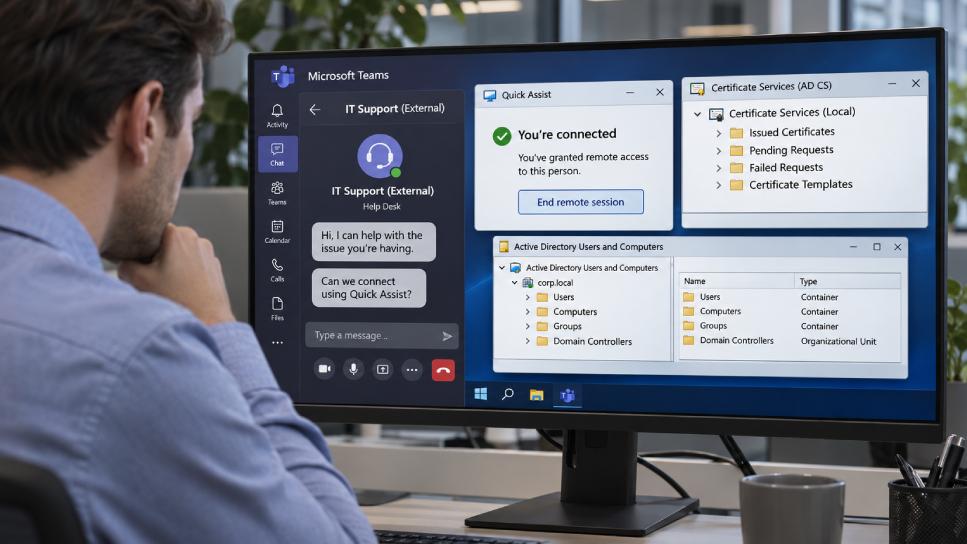
Attackers impersonating IT support on Microsoft Teams tricked employees into granting remote access to their PCs. They then exploited misconfigured Active Directory Certificate Services to obtain certificates for privileged accounts, including a domain controller, according to Microsoft's investigation of two such intrusions.
Article: Systemic Approach to Memory, Knowledge, and Context in Agentic AI Architectures

The article argues that reliable agentic AI systems depend on a dedicated context engine that selects, injects, compresses and expires information before it reaches the model. It distinguishes context, memory and knowledge, recommending tiered memory, curated knowledge and token budgeting while flagging anti-patterns like context stuffing.
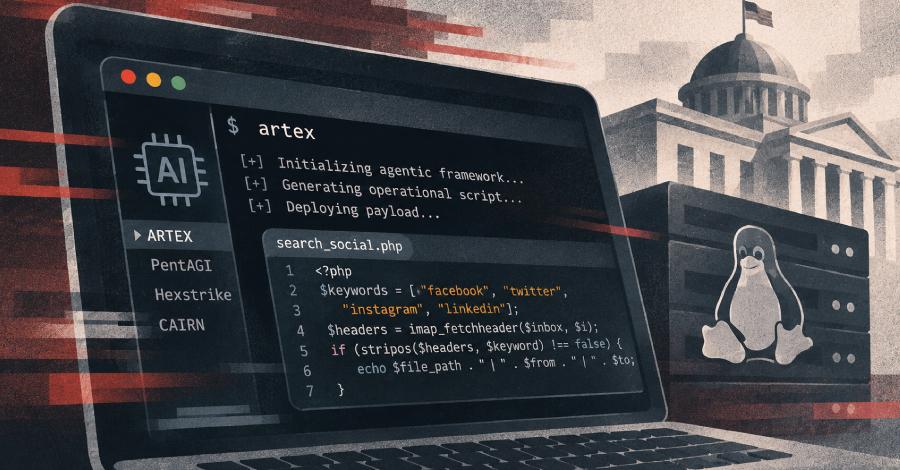
Unit 42 at Palo Alto Networks has uncovered an espionage campaign targeting Linux systems at government and state-affiliated organizations using malware dubbed SysGoRAT. Researchers suspect some attack scripts were AI-generated and have attributed the activity to an unidentified cluster tracked as CL-UNK-1211.

Ivanti has released patches for two new zero-day flaws in its Connect Secure remote access gateway that attackers have been chaining together in active exploitation since early October. Organizations running the affected product are urged to update immediately to prevent compromise.

Shopify has built an internal scanner called Overexposed that finds Kubernetes Ingresses on GKE and Cloud Run services exposed to the internet without authentication. The tool aims to catch unauthenticated endpoints before attackers can exploit them.
New VOLTA Infostealer Uses Claude, Gemini, and Kimi AI to Rank Victims by Financial Value
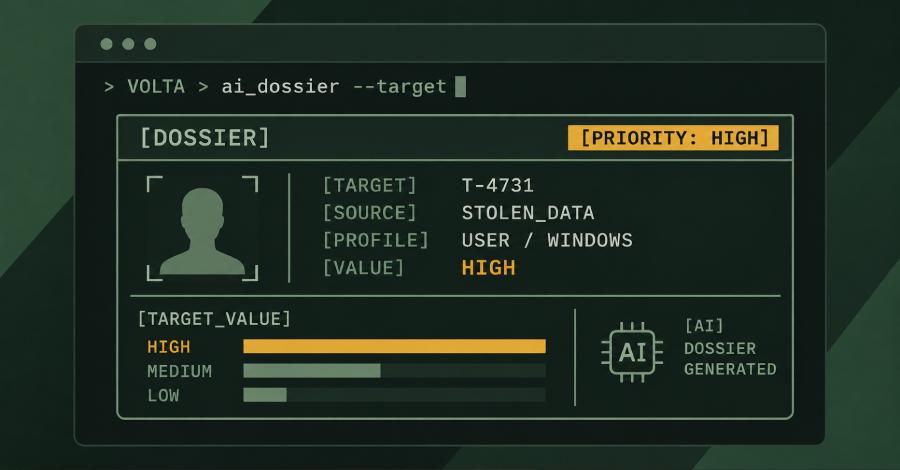
Researchers have identified a new Windows infostealer called VOLTA-AUTODOXER that uses an LLM to automatically rank stolen victim data by potential financial value. Beyond harvesting browser passwords, Outlook data and Slack credentials like typical stealers, it leverages AI analysis to prioritise which victims to monetize first.
Trigger.dev customer environment variables exposed

Trigger.dev disclosed a security incident in which customer environment variables, which often contain API keys and other secrets, were exposed to unauthorized parties. The company has published details of the incident and its response in an official blog post.

An economist at investment firm Apollo argues that most companies are seeing no measurable financial return from their AI investments. The analysis raises questions about whether heavy spending on AI technology is translating into real business results.
When Modernization Breaks Working Code: A Study of LLMs on Legacy PHP

A research paper examines how large language models perform when tasked with modernizing legacy PHP codebases, finding that models often introduce subtle functional regressions even as code appears improved. The findings raise questions about the reliability of LLMs as tools for refactoring older software systems.
Alpine Linux rebuilds GitLab after attempted RCE attack

Attackers attempted to exploit a critical GitLab flaw against Alpine Linux's development infrastructure on October 20-21. In response, the project rebuilt its GitLab server and reset all passwords amid concerns about a possible compromise.
OpenAI says it's doubling Pro usage limits and bringing Work features to Chat

OpenAI is doubling usage limits for Pro subscribers and merging usage allowances across ChatGPT and Codex. It is also bringing previously enterprise-only Work features into the standard ChatGPT chat interface.

OpenAI CEO Sam Altman argues DRAM manufacturing capacity is better allocated to data centers than personal computers, citing far higher utilization rates in large compute clusters. His comments come amid rising memory chip prices driven by surging AI data center demand.
CVSS 10.0 LXD, MicroCloud Flaw Lets Attackers Impersonate Trusted Clients Without a Private Key

A critical flaw in Canonical's LXD and MicroCloud allowed attackers to log in as a trusted client without possessing that client's private key, needing only network access to the HTTPS API and the client's public certificate. Successful exploitation granted full access to the cluster and its virtual machines, posing a serious risk for organisations running LXD clusters.

Amazon CEO Andy Jassy says AWS's committed cloud capacity is largely sold out through 2027, with part of 2028 already allocated. The company says it still reserves headroom for On Demand, EC2 and Bedrock, though practitioners report growing difficulty securing ordinary On Demand EC2 capacity.

The FBI has formally attributed the theft of over $6 billion in crypto assets from Binance to North Korea's TraderTraitor hacking group, also tracked under names like Jade Sleet and Slow Pisces. The investigation, run jointly with the Secret Service and IRS Criminal Investigation, marks one of the largest crypto heists on record.
A critical use-after-free vulnerability has been disclosed in the Linux kernel's IPv4 TCP stack, rated 9.8 on the CVSS scale. The flaw could allow remote code execution or system crashes, potentially affecting a wide range of servers and devices running Linux.