Microsoft has issued an out-of-band patch for a high-severity Exchange Server flaw, CVE-2026-96940, rated 8.8 on CVSS. Weak authorization checks let an authenticated attacker escalate privileges and access other users' mailboxes. Organizations running Exchange Server should apply the fix as soon as possible.
International
International developer, security and startup news, picked for Iceland's tech community.
ReviewBench: An open benchmark for AI code review
GitHub has released ReviewBench, an open benchmark for evaluating AI code review systems using a golden set modeled on over 100 million real GitHub pull requests. The benchmark aims to make offline evaluation of tools like Copilot code review more reliable at predicting real-world improvements.
OpenAI outlines how it plans to comply with new EU rules requiring provenance and labeling of AI-generated text. The move reflects broader EU transparency requirements for AI systems, relevant to developers and companies using such tools across Europe.
Denmark's Central Population Register has disclosed a data breach exposing personal information of about 8.8 million registered individuals. Authorities are investigating the scope and cause of the incident and notifying those affected.
New Dell System Update flaw lets hackers gain root privileges
Dell has warned customers about a critical vulnerability in its System Update (DSU) command-line tool that could allow attackers to escalate privileges to root level. The company is urging immediate patching to prevent exploitation.
⚡ Weekly Recap: NetScaler and FortiMail 0-Days, AI Coding Leaks, Spectre v2 and Ransomware Arrests
This weekly recap from The Hacker News covers actively exploited zero-days in NetScaler and FortiMail, alongside cleaner intrusion paths and more automated attacks. It also touches on leaks linked to AI coding tools, Spectre v2 vulnerabilities, and recent ransomware-related arrests.
Akka Tests Spec-Driven AI Delivery Across 65 Open Source Projects
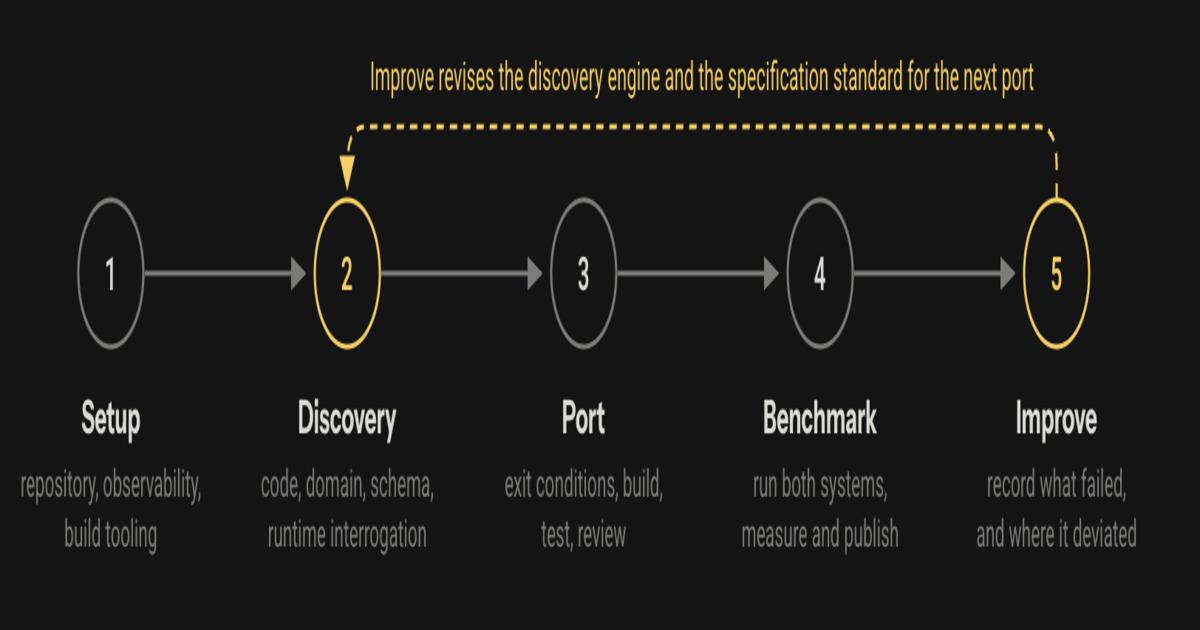
Akka ran an experiment across 65 open-source projects to study how spec structure, context, model choice and automated validation affect AI-assisted code porting. Results showed significant variation in time, token usage, code size and performance depending on model and project type.
Article: The Platform Engineering Playbook for Production LLMs
The author shares how hallucinations in an AI-driven inventory recommendation system were fixed by treating the LLM stack as shared infrastructure rather than a single application. The piece argues for a common platform with prompt versioning, schema enforcement, and per-request cost tracking.
Cloudflare has introduced a new API that lets developers fetch web search results directly through its platform. The service appears aimed at AI applications and tools that need real-time access to web data.
Apple plans to tighten macOS Full Disk Access permissions after finding that some developers use the setting to give AI agents broad access to files, mail, messages and browsing history. The change aims to reduce the risk of such agents accessing sensitive user data without full user awareness.
OpenAI is broadening ad formats within ChatGPT, starting with visual ads shown while users generate images. The move signals a new push to monetize the popular chatbot beyond subscriptions.
Cloudflare disclosed a vulnerability in its Containers and Sandboxes services where thin-provisioned storage pools failed to zero reused blocks, exposing data across unrelated tenants. Researchers recovered directory structures and complete SQLite databases from users on four continents, but Cloudflare has fixed the issue and found no evidence of exploitation.
Google halts open-source bug bounty program amid AI spam surge
Google has paused its Open Source Software Vulnerability Rewards Program after being overwhelmed with low-quality, AI-generated submissions. The company says the flood of spurious reports made the program unworkable and is now reviewing fixes before reopening it.
A critical flaw in Rejetto HTTP File Server, tracked as CVE-2026-61500 with a CVSS score of 9.3, is being actively exploited according to VulnCheck. The bug stems from a weak random number generator that lets attackers predict session keys and forge admin access to compromise servers.
Citrix has released patches for a high-severity NetScaler ADC and Gateway flaw already being exploited in targeted zero-day attacks. The memory overflow bug, CVE-2026-88779 with a CVSS score of 8.7, can disrupt SAML-based authentication deployments.
Cloudflare plans to launch its own certificate authority to issue TLS certificates using post-quantum cryptography. The move is part of broader efforts to prepare internet infrastructure for a future where quantum computers could break current encryption standards.
The post walks through building self-hosted HTTP tunnels using SSH and Nginx as an alternative to services like ngrok. It covers configuration details for securely exposing local web services to the internet without relying on third-party tunneling providers.
Citrix has released an emergency patch for a new NetScaler vulnerability, CVE-2026-88779, which has already been exploited in zero-day denial-of-service attacks. Researchers are investigating whether the flaw could also enable remote code execution, raising the stakes for organizations running NetScaler appliances.
Building a RAG Pipeline for Semantic Code Search
A JetBrains developer diary walks through the practical process of building a retrieval-augmented generation (RAG) pipeline for semantic code search. The post shares field notes and lessons learned rather than announcing a finished product.
Run Qwen 3.8 Flash Next (125B) on consumer hardware (RTX 4090) at 100T/s
A GitHub project called Strata demonstrates running a large Qwen language model (125B parameters) on consumer hardware like an RTX 4090 GPU, achieving around 100 tokens per second. This is notable for developers seeking to run large LLMs without expensive specialized infrastructure.
A team at AWS has open-sourced Pizza Bot, a self-hosted inbox-style tool that lets AI agents run background tasks and report results. It supports scheduled and webhook-triggered work, delegation to specialized workers, and pausing for human approval.
New Archestra's OpenAPPA Saturates Two Major Security Benchmarks with a 0% Attack Success Rate
Archestra has released OpenAPPA, an open-source security engine aimed at preventing data exfiltration caused by prompt injection or model hallucination in AI agents. In benchmark tests using Bench-Corp and AgentThreatBench, it achieved a 0% attack success rate, compared to 10% for Claude Code and 31% for Microsoft FIDES.
Reports suggest Google is preparing a new version of Gemini for macOS that could gain broad access to a user's files, apps and web browsing. The change raises privacy concerns since actions might be carried out without repeated permission prompts.
A senior safety staffer at OpenAI has resigned, describing the company's internal culture as broken. The departure adds to a string of exits amid concerns that safety considerations are being deprioritized in favor of faster product development.