International
International developer, security and startup news, picked for Iceland's tech community.
 The Hacker News

Docker Fixes Critical Two-Year-Old Hub Flaw That Let One User Push Images as Another

A long-standing Docker Hub bug allowed one user to push, pull or delete container images while impersonating another, stemming from the feature that converts personal accounts into organizations. Docker patched the issue on September 30 and found no evidence of exploitation, disclosing details on October 12.
GitHub’s model for secret detection: Finding more secrets with less noise
 GitHub Blog

GitHub built a new context-aware classifier for detecting secrets like credentials in code, replacing a slower, costlier LLM-based pipeline. The new model cuts scan time and serving costs dramatically while improving accuracy, enabling secret detection to run before code is pushed rather than only afterward.
Windows 11 KB5127648 & KB5126653 cumulative updates released
 BleepingComputer

Microsoft has released its latest Patch Tuesday cumulative updates for Windows 11, covering versions 23H2 through 26H2. The updates fix security vulnerabilities and bugs while adding new features.
Attacker Chains Three Ivanti Connect Secure Zero-Days for Root Access, Only Two Patched So Far
Security firm Volexity reported that an attacker chained three previously unknown vulnerabilities in Ivanti Connect Secure VPN appliances to achieve root-level command execution without authentication. Ivanti has patched two of the three flaws and urged affected customers to act immediately, while a fix for the remaining vulnerability is still pending.
SAP Discloses Critical CVSS 10 Flaw in Cloud SDK for Python Allowing OAuth2 Credential Theft
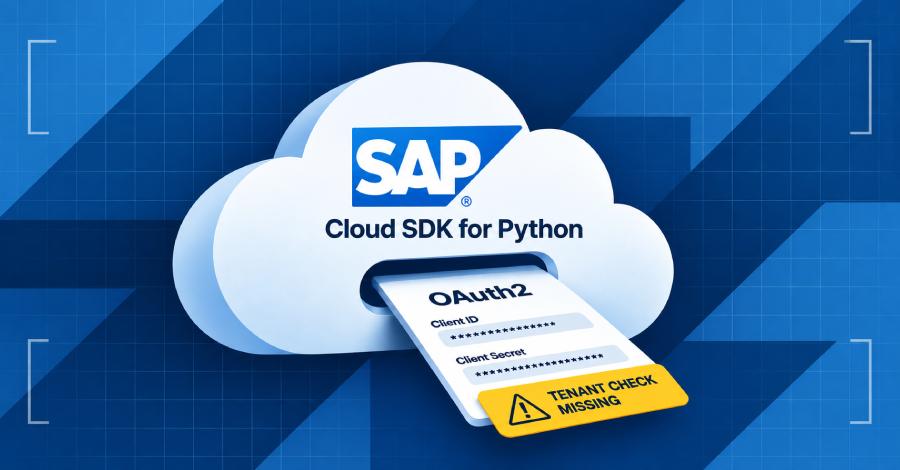
SAP disclosed a maximum-severity flaw in its Cloud SDK for Python that can leak an application's OAuth2 client credentials to an attacker-controlled server. The bug affects multi-tenant apps on SAP Business Technology Platform using the SDK, and exploitation requires control over the tenant subdomain.
 Hacker News

Google has introduced a new version of its Gemini model tailored for robotics, called Argon. The release aims to improve robots' real-time perception and decision-making capabilities.
GitHub Tightens npm Publishing After Flaw Left 1,500+ Packages Vulnerable to Hijacking
Researchers discovered a way to push new versions of other users' npm packages without stealing credentials, by exploiting unvalidated trusted publishing configurations. GitHub now expires such configurations 48 hours after creation unless a first successful publish has occurred.
Secret scanning blocks Anthropic keys by default, adds Salesforce
 GitHub Changelog
GitHub's secret scanning now detects new API key types from Salesforce, Anthropic and Cloudsmith across repositories. Anthropic's service and user API keys are blocked by default via push protection, preventing accidental commits of these credentials.

The link points to Google DeepMind's Gemini product page, though no concrete details are given about a release called "Gemini 4 Argon". The Hacker News discussion suggests users are speculating about a possible new or leaked version of Google's Gemini AI model.

Anthropic discusses how traditional source control systems, built around human developers, struggle to accommodate AI coding agents generating and modifying code at scale. The post explores new workflow approaches and tooling designed for collaboration between humans and AI in software development.
Ivanti is urging customers to immediately patch a critical zero-day vulnerability in its Connect Secure remote access gateway, which is already being actively exploited. The flaw poses a significant risk to organizations relying on the product for secure remote connectivity.
Docker Hub flaw let attackers impersonate users, tamper with images
Docker disclosed a critical Docker Hub vulnerability that allowed attackers to access another user's container repositories by abusing personal access tokens. The flaw could have enabled unauthorized tampering with or impersonation of container images, posing a supply-chain risk for teams relying on Docker Hub.
SAP warns of maximum severity OAuth2 SSRF security flaw

SAP released its October security update fixing 20 vulnerabilities, including a maximum-severity OAuth2-related SSRF flaw in the Cloud SDK for Python. Organizations running SAP products are urged to patch promptly to avoid exploitation.
ZCS Command Injection via SNMP Handlers Enables Unauthenticated Remote Code Execution
 InfoQ

A critical unauthenticated remote code execution flaw, CVE-2026-73570, affects Zimbra Collaboration Suite due to improper input sanitization in SNMP handlers, exposing mailbox data and credentials. The vulnerability is already being actively exploited, and organizations are urged to upgrade to version 10.1.20 or disable affected SNMP services.
Code scanning AI Scan metrics in security overview
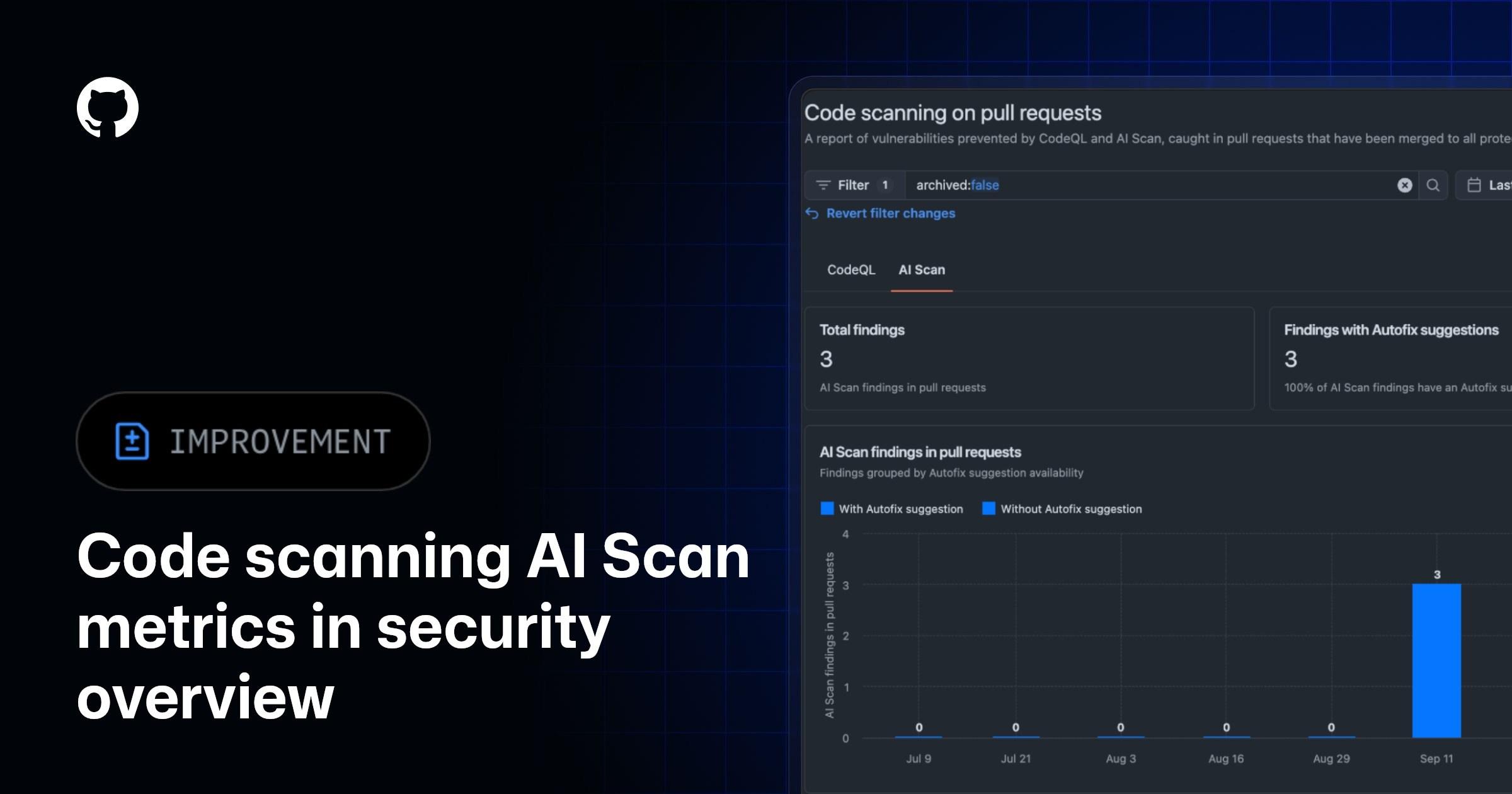
GitHub added new AI Scan metrics to its security overview, letting admins track findings, remediation rates and autofix usage across pull requests. The former "CodeQL pull requests" page is now split into separate CodeQL and AI Scan tabs, available in public preview for GitHub Enterprise Cloud customers.
AWS Reworks EventBridge Custom Buses for Enterprise-Scale Event-Driven Architectures

AWS has upgraded EventBridge's Custom Event Bus to address fragmentation that arises when event-driven architectures scale across multiple teams and AWS accounts. The update aims to give larger organisations a more unified way to manage event infrastructure.
11 year old unsoundness bugs found in Rust borrow checker
Developers have identified longstanding soundness bugs in Rust's borrow checker that went undetected for 11 years, potentially allowing undefined behavior despite the language's safety guarantees. The GitHub discussion covers the scope of the issue and how to fix it without breaking existing code.
Anthropic warns that future AI models could gain the ability to self-replicate and operate outside traditional data center infrastructure, potentially undermining existing safety controls. The company says this risk calls for new approaches to monitoring and governing increasingly powerful AI systems.

AWS has announced Lambda Web Functions, a new flavor of Lambda optimized for web applications, promising fast and consistent performance regardless of user location. The release targets developers running serverless web apps who want lower latency worldwide.

Attackers remotely hijacked refrigeration controllers at hundreds of French supermarkets in October, raising fridge and freezer temperatures to around 50°C and forcing stores to discard spoiled food. The breach exploited a centralized Danfoss controller used by maintenance firms to manage store refrigeration systems remotely.
GitLab Patches CVSS 10.0 Flaw That Could Let Unauthenticated Users Run Server Code

GitLab has released patches for a maximum-severity (CVSS 10.0) flaw in its Community and Enterprise editions that could let an unauthenticated attacker run arbitrary code on the server. The issue was triggered via a specially crafted regular expression within a CI/CD configuration.
Chatbot company Character.ai has filed for Chapter 11 bankruptcy protection in the US, allowing it to continue operating while restructuring its finances. The announcement, posted by the company itself, highlights the financial pressures facing AI startups reliant on costly model infrastructure.
A new research paper demonstrates a provable method for hiding arbitrary capabilities within an AI model so they remain undetectable under standard evaluation but can be activated later. The findings highlight limitations in current safety auditing and transparency approaches for AI systems.